

Do low mast lights attract insects? Well, that's a question I get asked a lot as a supplier of Low Mast Lights. Let's dive into this topic and see what's what.
First off, we need to understand a bit about insects and light. Insects have a complex relationship with light sources. Many of us have witnessed the spectacle of bugs swarming around a bright light at night. It's a common sight, whether it's around a porch light or a street lamp. But what causes this behavior?
Scientists believe that insects use light for navigation. For example, some insects navigate by the moon or stars, which are essentially distant light sources. Artificial lights can disrupt this natural navigation system. Insects might mistake a low mast light or any artificial light for a celestial object and end up getting trapped in an endless loop around it.
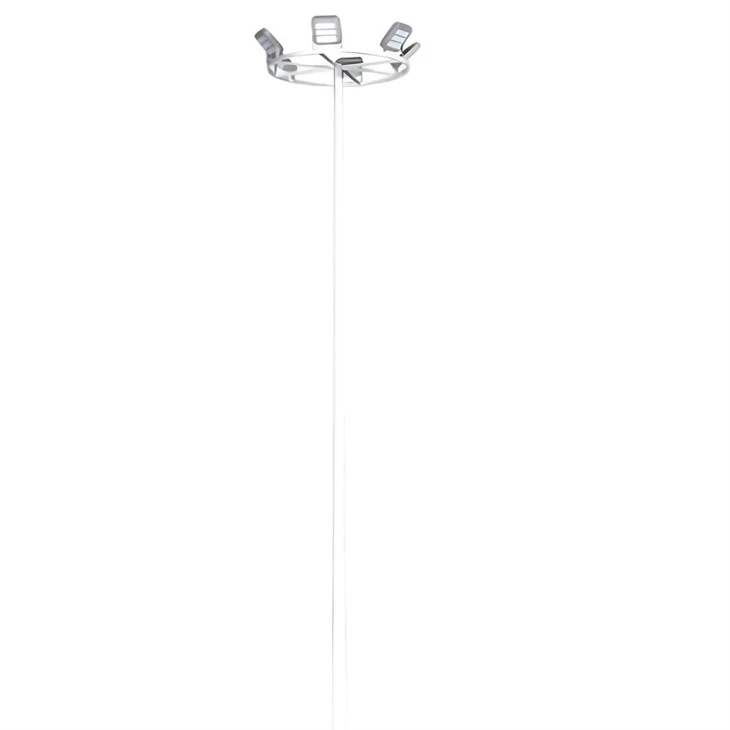
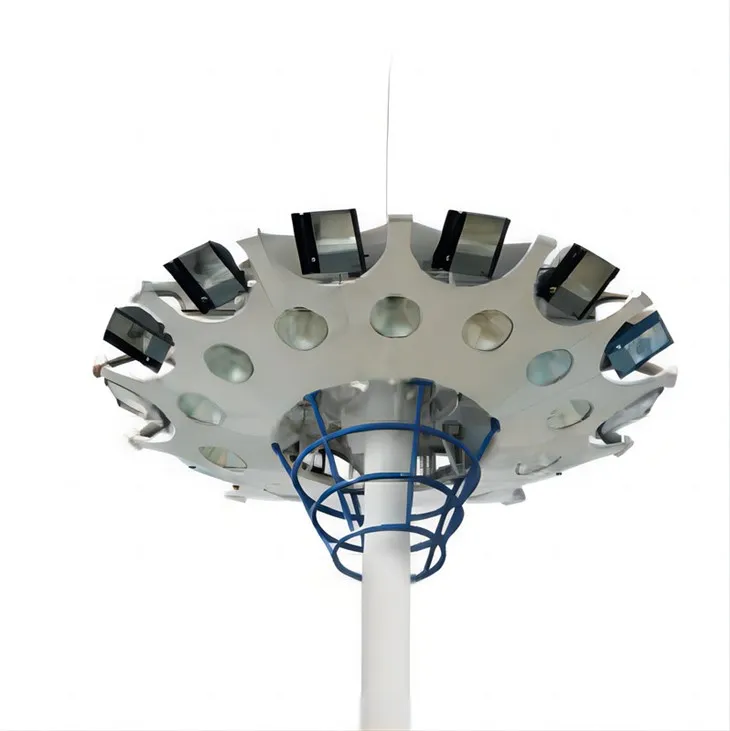
Now, let's talk about low mast lights specifically. Low mast lights are typically used in areas where a lower - level, more focused illumination is required. They're often seen in parking lots, small gardens, and along pathways. Compared to Led High Mast Flood Lights, which are designed to cover large areas from a great height, low mast lights are closer to the ground and provide a more concentrated beam of light.
The attractiveness of low mast lights to insects can depend on several factors. One of the most important factors is the color of the light. Different colors of light have different wavelengths, and insects are more attracted to certain wavelengths than others. Ultraviolet (UV) light, for example, is very attractive to many insects. This is because many insects can see UV light, and it's often associated with flowers, which are a source of food for them.
Most traditional incandescent bulbs emit a broad spectrum of light that includes some UV light. So, if your low mast lights are using incandescent bulbs, they're more likely to attract insects. On the other hand, LED lights can be designed to emit a very specific spectrum of light. You can get LED low mast lights that emit very little to no UV light. These types of LED lights are much less attractive to insects.
Another factor is the intensity of the light. Bright lights are generally more likely to attract insects than dim lights. Low mast lights can be adjusted in terms of their brightness. If you set them at a lower intensity, they'll be less likely to draw in a large number of insects. However, you also need to consider the purpose of the lights. If they're for safety in a parking lot, you might not want to set them too dim.
The location of the low mast lights also matters. If the lights are placed near areas with a high insect population, like a pond or a heavily vegetated area, they're more likely to attract insects. In such cases, you might want to consider using insect - repelling techniques in combination with the lights. For example, you could plant insect - repelling plants around the lights or use insect - repelling sprays in the vicinity.
When it comes to comparing low mast lights with Highway High Mast Lighting, the situation is a bit different. Highway high mast lighting is usually much brighter and covers a much larger area. The high - altitude of these lights means that insects are less likely to be directly affected by them compared to low mast lights. However, the large amount of light they emit can still attract insects from a distance, and the insects might end up getting swatted by passing vehicles.
Solar - powered low mast lights, like Solar High Mast Pole (though we're talking about low mast here, the solar concept is similar), are also an option. Solar lights are energy - efficient and can be a great choice for outdoor lighting. They often use LED technology, which as we've discussed, can be adjusted to be less attractive to insects. Plus, since they rely on solar power, they're environmentally friendly.
So, do low mast lights attract insects? The answer is: it depends. If you choose the right type of bulbs, adjust the brightness appropriately, and consider the location, you can minimize the insect - attracting effect of your low mast lights.
As a supplier of Low Mast Lights, I've seen firsthand the different needs of my customers. Some are more concerned about safety and visibility, while others are worried about the insects. That's why we offer a wide range of options. We have LED low mast lights that are specifically designed to be insect - friendly. These lights emit a warm, yellow - tinted light that insects find less appealing.
If you're in the market for low mast lights and want to avoid a bug - filled environment, we can help. Our team of experts can guide you through the selection process, taking into account your specific requirements. Whether it's for a small backyard or a large commercial parking lot, we have the right solution for you.
Don't let insects ruin your outdoor lighting experience. Contact us today to discuss your low mast light needs, and let's find the perfect lighting solution that balances visibility and insect control.
References
- "Insects and Light: A Complex Relationship" - Journal of Entomological Research
- "The Impact of Different Light Spectrums on Insect Behavior" - Environmental Science Journal
- "Solar Lighting and Its Effects on Insect Populations" - Renewable Energy Research


