

Hey everyone! I'm working for a traffic lights supplier, and today I wanna talk about whether traffic lights have an impact on fuel consumption. It's a topic that's been on my mind for a while, especially considering the role we play in providing these traffic management tools.
Let's start by understanding how traffic lights work. Traffic lights are like the conductors of the road symphony. They control the flow of vehicles, pedestrians, and cyclists, ensuring safety and order. But how do they affect fuel consumption?
When a vehicle approaches a red light, it has to stop. This means the engine is idling, and fuel is being burned without the vehicle moving forward. The longer the vehicle is idling at a red light, the more fuel it consumes. For example, if you're stuck at a red light for a couple of minutes, your engine is still using fuel to keep running.
On the other hand, when the light turns green, the vehicle has to accelerate from a stop. This acceleration requires a significant amount of energy, and thus more fuel. If the traffic light timing is not optimized, vehicles may have to stop and start frequently, which can lead to increased fuel consumption.
Let's take a look at some data. Studies have shown that inefficient traffic light systems can cause a significant increase in fuel consumption. In some urban areas, traffic congestion due to poorly timed traffic lights can increase fuel consumption by up to 20%. That's a huge amount!
Now, let's talk about the different types of traffic lights and how they can impact fuel consumption.
First, there's the Blinking Red Light On Road. A blinking red light usually means the same as a stop sign. Vehicles have to come to a complete stop and then proceed when it's safe. This type of light can cause vehicles to stop and start more frequently, which can increase fuel consumption. However, in some cases, a blinking red light can also help to manage traffic flow in areas with low traffic volume, reducing the need for vehicles to wait at a full stop for an extended period.
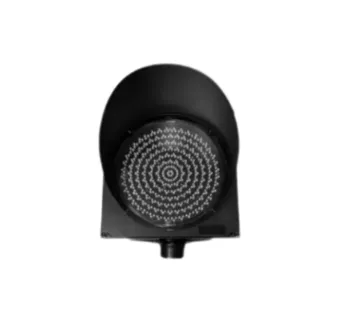

Next, we have the Pedestrian Activated Light. These lights are designed to give pedestrians the right of way when they press a button. When a pedestrian activates the light, the traffic light may change to red for vehicles, causing them to stop. This can lead to increased fuel consumption, especially if there are a lot of pedestrians using the light. However, these lights are important for ensuring pedestrian safety, so it's a trade-off.
Finally, there's the Flashing White Light On Traffic Lights. Flashing white lights are often used to indicate that a traffic light is about to change. This can help drivers anticipate the change and adjust their speed accordingly, potentially reducing the need for sudden stops and starts, which can save fuel.
So, what can we do to reduce the impact of traffic lights on fuel consumption?
One solution is to optimize the traffic light timing. By using advanced traffic management systems, we can adjust the timing of traffic lights based on the traffic flow. For example, during peak hours, the lights can be programmed to allow for more continuous traffic flow, reducing the number of stops and starts.
Another solution is to use smart traffic lights. These lights can communicate with each other and with vehicles to optimize traffic flow. For example, they can adjust the timing based on the speed and location of approaching vehicles, reducing the need for vehicles to stop at red lights.
As a traffic lights supplier, we're committed to providing high-quality traffic lights that are designed to reduce fuel consumption. We work with traffic engineers and city planners to develop solutions that are both effective and efficient.
If you're interested in learning more about our traffic lights and how they can help reduce fuel consumption, we'd love to talk to you. Whether you're a city planner, a traffic engineer, or a business owner, we can provide you with the information and solutions you need.
In conclusion, traffic lights do have an impact on fuel consumption. By understanding how traffic lights work and implementing strategies to optimize their timing, we can reduce the amount of fuel consumed by vehicles on the road. As a traffic lights supplier, we're here to help you make the most of your traffic management system and reduce your environmental impact.
References
- Traffic Signal Timing Manual, Federal Highway Administration
- Studies on the Impact of Traffic Lights on Fuel Consumption, various academic journals


