

In the era of the Internet of Things (IoT), the integration of smart devices has become a cornerstone of modern technological advancement. As a supplier of Solar High Mast Poles, I have witnessed firsthand the transformative power of these intelligent structures and their ability to communicate seamlessly with other smart devices. This blog post delves into the mechanisms through which a solar high mast pole communicates with other smart devices, exploring the technologies involved, the benefits of such communication, and the potential applications in various industries.
Communication Technologies
Wi - Fi
Wi - Fi is one of the most common communication technologies used by solar high mast poles. It allows the pole to connect to a local network, enabling it to communicate with other Wi - Fi - enabled smart devices in the vicinity. For example, a solar high mast pole can be connected to a nearby control center or a smart grid through a Wi - Fi network. This connection enables real - time monitoring and control of the pole's functions, such as adjusting the lighting intensity based on the ambient light conditions or the time of day.
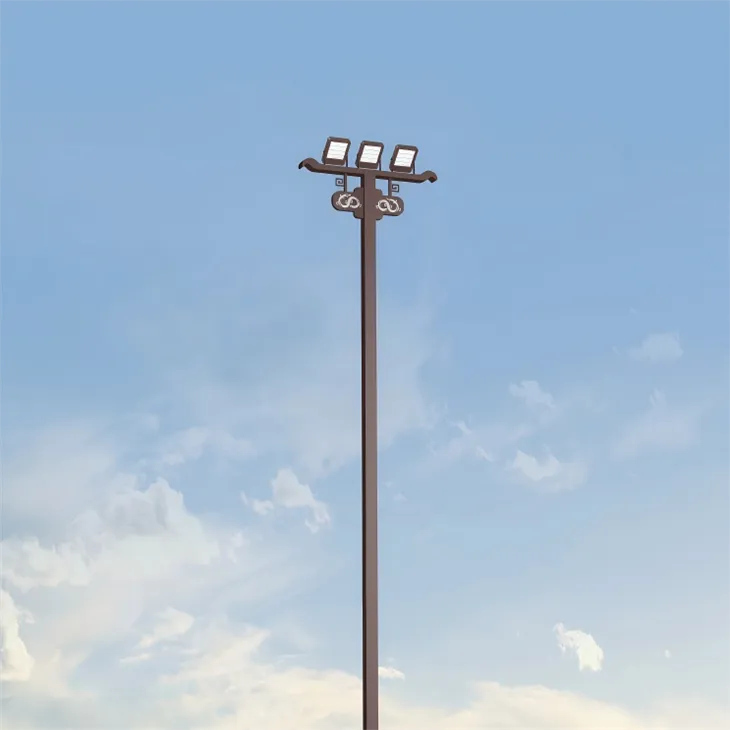

The advantage of Wi - Fi is its wide availability and ease of use. Most modern smart devices, including smartphones, tablets, and laptops, are Wi - Fi enabled, making it convenient to establish a communication link between the solar high mast pole and these devices. However, Wi - Fi has limitations in terms of range and the number of connected devices. In large - scale applications, additional access points may be required to ensure reliable communication.
ZigBee
ZigBee is a low - power, wireless communication protocol designed for short - range communication. It operates on the 2.4 GHz radio frequency band and is suitable for applications that require low data rates and low power consumption. Solar high mast poles can use ZigBee to communicate with other ZigBee - enabled smart devices, such as sensors and actuators.
ZigBee forms a mesh network, where each device can act as a router to relay data to other devices in the network. This allows for a more robust and reliable communication system, especially in large - scale deployments. For instance, a solar high mast pole equipped with ZigBee can communicate with nearby environmental sensors to gather data on temperature, humidity, and air quality. This data can then be used to optimize the performance of the pole and other connected devices.
LoRaWAN
LoRaWAN (Long Range Wide Area Network) is a long - range, low - power wireless communication protocol. It is designed for applications that require long - distance communication with low data rates, making it suitable for solar high mast poles in remote areas. LoRaWAN operates on unlicensed radio frequency bands, which reduces the cost of deployment.
A solar high mast pole using LoRaWAN can communicate with a central server over long distances without the need for a complex infrastructure. This is particularly useful for monitoring and controlling high mast poles in rural or industrial areas where traditional communication networks may not be available. For example, a solar high mast pole in a remote industrial park can transmit data on its power consumption and lighting status to a central management system using LoRaWAN.
Benefits of Communication
Energy Efficiency
By communicating with other smart devices, a solar high mast pole can optimize its energy consumption. For example, it can receive data from ambient light sensors to adjust the lighting intensity according to the actual light conditions. This not only reduces energy waste but also extends the lifespan of the lighting fixtures. Additionally, the pole can communicate with a smart grid to schedule its charging and discharging cycles, taking advantage of off - peak electricity rates.
Remote Monitoring and Control
Communication with other smart devices enables remote monitoring and control of the solar high mast pole. Operators can access real - time data on the pole's performance, such as power output, battery status, and lighting levels, from a central control center. This allows for quick response to any issues or malfunctions, reducing downtime and maintenance costs. For example, if a sensor on the pole detects a fault, it can send an alert to the operator, who can then take appropriate action.
Integration with Smart City Systems
Solar high mast poles can be integrated into smart city systems, contributing to the overall efficiency and sustainability of the city. They can communicate with other smart devices, such as traffic sensors, environmental monitors, and public safety systems. For instance, a solar high mast pole can be linked to traffic sensors to adjust the lighting intensity based on the traffic flow. This not only improves road safety but also enhances the overall quality of life in the city.
Potential Applications
Street Lighting
In street lighting applications, solar high mast poles can communicate with other smart devices to provide intelligent lighting solutions. They can adjust the lighting levels based on the time of day, traffic conditions, and pedestrian activity. For example, during off - peak hours, the lighting intensity can be reduced to save energy, while during peak hours, it can be increased to ensure safety. The Flood Light Mast is a great example of a high - mast lighting solution that can be integrated into a smart street lighting system.
Industrial Areas
In industrial areas, solar high mast poles can be used to provide lighting and monitor environmental conditions. They can communicate with sensors to detect gas leaks, temperature changes, and other potential hazards. The 30m High Mast Lighting is suitable for large - scale industrial applications, providing high - intensity lighting over a wide area.
Sports Venues
Solar high mast poles are also widely used in sports venues. They can communicate with other smart devices, such as scoreboards and security systems, to enhance the overall experience for spectators and athletes. The High Mast Light Pole With Ladder is designed for easy maintenance and installation, making it a popular choice for sports venues.
Conclusion
The ability of a solar high mast pole to communicate with other smart devices is a game - changer in the field of lighting and energy management. Through technologies such as Wi - Fi, ZigBee, and LoRaWAN, these poles can optimize energy consumption, enable remote monitoring and control, and integrate with smart city systems. The benefits of such communication are far - reaching, from energy efficiency to improved public safety.
If you are interested in exploring the potential of our Solar High Mast Poles and their communication capabilities, we invite you to contact us for a detailed discussion. Our team of experts is ready to provide you with customized solutions that meet your specific needs.
References
- "Internet of Things: A Survey," by Atzori, L., Iera, A., & Morabito, G.
- "Wireless Sensor Networks: A Survey," by Akyildiz, I. F., Su, W., Sankarasubramaniam, Y., & Cayirci, E.
- "Smart Grid: The New and Improved Power Grid," by Katiyar, A., & Verma, A.


