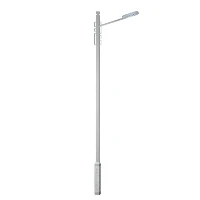
So, you're thinking about getting some solar integrated lamps for your place, huh? As a supplier of these nifty lighting solutions, I get this question a lot: "How much space does a solar integrated lamp need for installation?" Well, let's dive right in and break it down.
First off, what exactly is a solar integrated lamp? It's basically a self - contained lighting unit that combines a solar panel, battery, and LED light all in one package. These things are super convenient because they don't need any external wiring to connect to the power grid. They soak up sunlight during the day and use that stored energy to light up at night.
Factors Affecting Installation Space
There are several factors that determine how much space a solar integrated lamp needs. Let's start with the solar panel. The size of the solar panel is crucial because it's the part that captures sunlight and converts it into electricity. A larger solar panel can generate more power, but it also takes up more space.
For instance, if you're looking at our Solar Panel Road Light, it has a relatively large solar panel to ensure it can collect enough sunlight, especially in areas with less sunlight exposure. The panel might need a clear, unobstructed area of about 1 - 2 square feet, depending on the model. This area should be free from any shade, like trees or buildings, because even a little bit of shade can significantly reduce the panel's efficiency.
Another factor is the lamp itself. The physical size of the lamp housing can vary. Some of our more compact models may be small enough to fit on a narrow post or a wall - mounted bracket. On the other hand, our Super Bright Solar Street Light is designed to provide high - intensity illumination over a large area. It's a bit bulkier and might need a bit more space for installation.
The installation location also plays a big role. If you're installing the lamp on a street or a parking lot, you'll need to make sure there's enough clearance around it. You don't want it to be blocked by cars or pedestrians. For street applications, you typically need to have at least a few feet of space around the lamp, both horizontally and vertically.
If you're thinking about installing the lamp in a garden or a backyard, you have a bit more flexibility. However, you still need to consider the light's spread. You want the light to cover the area you want to illuminate without shining directly into windows or other areas where it might be a nuisance.
Different Types of Solar Integrated Lamps and Their Space Requirements
Let's take a look at some of the different types of solar integrated lamps we offer and their specific space needs.
Warm White Solar Street Light
Our Warm White Solar Street Light is designed to create a cozy and inviting atmosphere. The solar panel on this lamp is moderately sized. For the panel, you'll need about 1.5 square feet of clear space. The lamp itself is usually mounted on a pole, and you'll need to have a pole that's at least 8 - 10 feet tall. You also need to make sure there's about 3 - 4 feet of clear space around the base of the pole to prevent any tripping hazards.
300w Led Solar Street Lights Outdoor
The 300w Led Solar Street Lights Outdoor are powerful and can cover a large area. These lamps have larger solar panels to generate enough power for the high - wattage LED. The solar panel might require around 2 - 2.5 square feet of unshaded space. Since they're designed for outdoor use in large areas like industrial sites or large parking lots, they're usually mounted on tall poles, around 12 - 15 feet. You'll need to have a clear area of about 5 - 6 feet around the base of the pole.
Ip65 Solar Street Light
The Ip65 Solar Street Light is known for its high - level of water and dust resistance. The space requirements for this lamp are similar to the 300w model. The solar panel needs about 2 square feet of clear space, and the pole should be at least 10 - 12 feet tall with about 4 - 5 feet of clear space around the base.


Installation Tips to Maximize Space
Now that you know how much space each type of lamp needs, here are some tips to make the most of your installation area.
First, choose the right location. Look for a spot that gets plenty of sunlight during the day. South - facing areas in the Northern Hemisphere and north - facing areas in the Southern Hemisphere are usually the best. Also, make sure the area is free from any debris or obstacles that could block the sunlight or damage the lamp.
If you're installing multiple lamps, plan the spacing carefully. You want to make sure each lamp has enough space for its solar panel and that the light from each lamp doesn't interfere with the others. A good rule of thumb is to space the lamps about 10 - 15 feet apart, depending on the type of lamp and the area you want to illuminate.
When mounting the lamp on a pole or a wall, make sure it's secure. You don't want it to fall or get knocked over easily. Use the right mounting hardware and follow the installation instructions carefully.
Conclusion
So, as you can see, the amount of space a solar integrated lamp needs for installation depends on a few different factors, like the size of the solar panel, the lamp itself, and the installation location. But with a bit of planning and the right choice of lamp for your space, you can have an efficient and effective solar lighting system.
If you're interested in purchasing our solar integrated lamps, we're here to help. Whether you have a small backyard or a large commercial area to light up, we have the right solution for you. Just reach out to us for more information and to start a procurement discussion. We'll be happy to assist you in finding the perfect solar integrated lamps for your needs.
References
- General knowledge about solar integrated lamp technology
- Product specifications of our solar integrated lamps