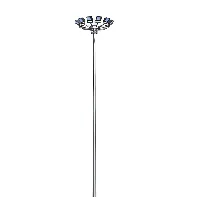
As a high mast lighting supplier, I've been in the thick of the industry for quite some time. One question that often pops up from our clients is, "How do you measure the performance of high mast lighting?" Well, let's dive right into it and break down the key aspects.
1. Illuminance
Illuminance is like the bread - and - butter metric when it comes to high mast lighting. It measures the amount of light that falls on a surface. In simple terms, it tells you how bright a particular area is. The unit of illuminance is lux (lx).
For different applications, there are specific illuminance requirements. For example, in a large parking lot, you'd typically want an illuminance of around 10 - 20 lux for general safety and visibility. But in a sports stadium, especially for professional events, the illuminance can go as high as 1000 lux or more.
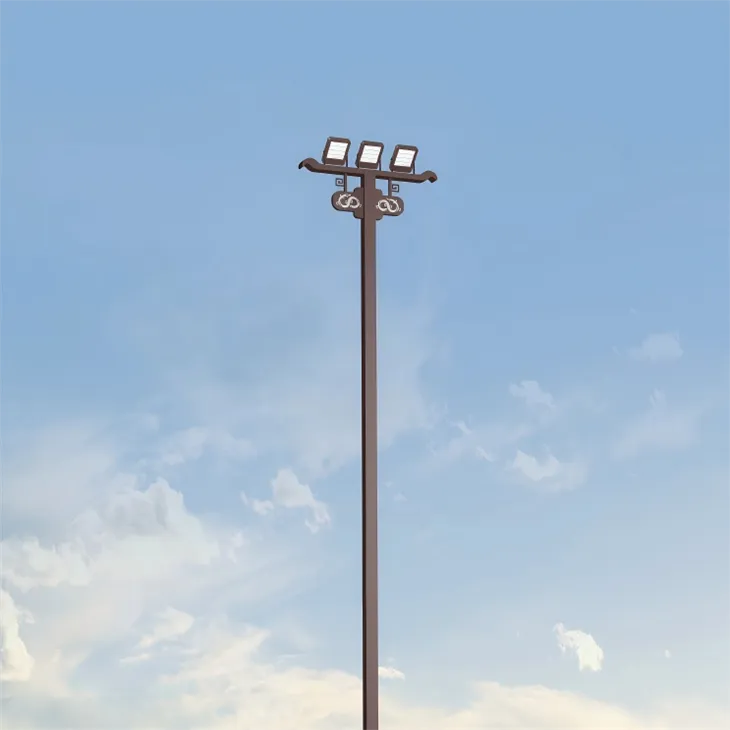
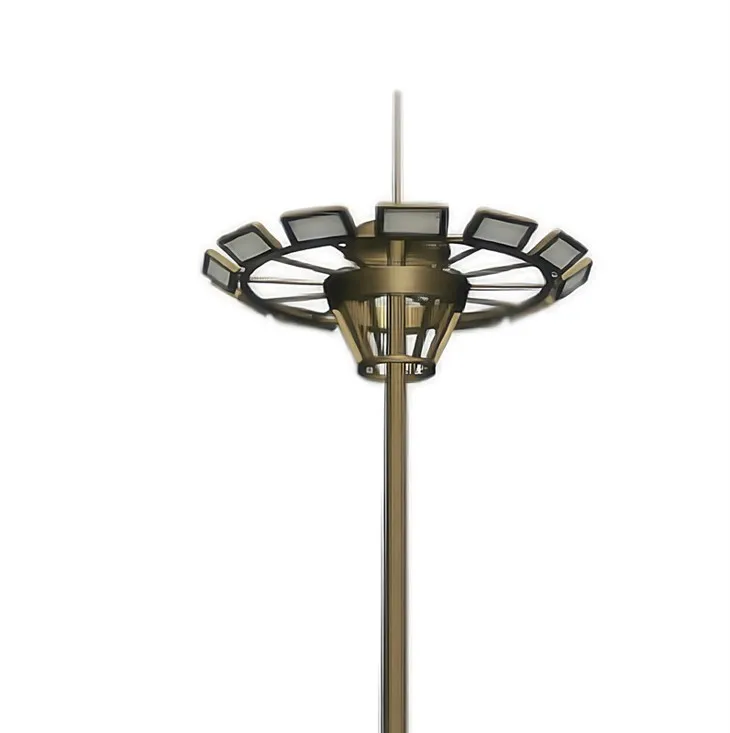
To measure illuminance, we use a device called a lux meter. It's a handy little tool that you can place at various points in the area covered by the high mast lighting. We usually take multiple readings at different locations and heights to get a comprehensive understanding of how the light is distributed. If the illuminance is too low in certain areas, it might mean that the high mast lights are either not powerful enough or not positioned correctly. On the other hand, if it's too high, it could lead to unnecessary energy consumption and glare.
2. Uniformity
Uniformity is all about how evenly the light is spread across the illuminated area. A high - quality high mast lighting system should provide a consistent level of brightness throughout the space. We calculate uniformity by comparing the minimum illuminance to the average illuminance in the area.
Let's say you have a large industrial yard lit by high mast lights. If there are dark spots or areas that are significantly brighter than others, it can cause problems. Workers might have trouble seeing clearly in the dimmer areas, which can lead to safety hazards. Also, uneven lighting can be visually unappealing.
The ideal uniformity ratio varies depending on the application. For most outdoor areas, a uniformity ratio of 0.4 - 0.6 is considered acceptable. To improve uniformity, we can adjust the beam angle of the High Mast Light Fixtures or change the spacing between the high mast poles.
3. Color Rendering Index (CRI)
The Color Rendering Index is a measure of how accurately a light source can reproduce the colors of objects compared to natural sunlight. It's rated on a scale from 0 to 100, with 100 being the best.
In high mast lighting, CRI is important, especially in areas where color discrimination is crucial. For example, in a shipping yard where workers need to identify different colored containers, a high CRI light is essential. A light with a low CRI can make colors look dull or distorted, which can lead to mistakes.
Most modern high mast lighting systems, especially those using LED technology, can achieve a CRI of 80 or higher. When we're evaluating the performance of our high mast lights, we always check the CRI to ensure that it meets the requirements of the specific application.
4. Lumen Maintenance
Lumen maintenance refers to how well a light source maintains its light output over time. As high mast lights age, their brightness can gradually decrease. This is due to factors like the degradation of the light - emitting elements and the build - up of dirt and dust on the fixtures.
We measure lumen maintenance by comparing the initial light output of the high mast lights to their output after a certain period of operation. For example, we might test the lights after 10,000 hours or 20,000 hours of use. A good high mast lighting system should have a high lumen maintenance rate. LED high mast lights, for instance, typically have a better lumen maintenance compared to traditional lighting technologies like metal halide lamps.
If the lumen maintenance is poor, it means that the lights will need to be replaced more frequently, which can be costly. To improve lumen maintenance, we can use high - quality components in our High Mast Light Fixtures and recommend regular cleaning and maintenance to our clients.
5. Glare Control
Glare is a major issue in high mast lighting. It occurs when there is a significant difference in brightness between the light source and the surrounding area, which can cause discomfort and reduce visibility. There are two types of glare: disability glare and discomfort glare.
Disability glare can actually make it difficult for people to see clearly, while discomfort glare just makes the environment unpleasant. To measure glare, we use a metric called the Unified Glare Rating (UGR). A lower UGR value indicates less glare.
We can control glare by using fixtures with proper shielding and by adjusting the mounting height and angle of the high mast lights. For example, our Retractable High Mast Lamp is designed with features that help reduce glare, making it suitable for a wide range of applications.
6. Energy Efficiency
In today's world, energy efficiency is a top priority. High mast lighting systems can consume a significant amount of electricity, so it's important to measure and improve their energy efficiency.
We calculate energy efficiency by looking at the amount of light output (lumens) per unit of power input (watts). This is known as the luminous efficacy, which is measured in lumens per watt (lm/W). A higher luminous efficacy means that the high mast lights are more energy - efficient.
LED high mast lights are known for their high energy efficiency. They can produce more light with less power compared to traditional lighting technologies. For example, our Led Tennis Court Lights For Stadium High Mast Pole are designed to be highly energy - efficient, helping our clients save on electricity costs in the long run.
7. Light Pollution
Light pollution is an often - overlooked aspect of high mast lighting performance. It refers to the unwanted or excessive artificial light that spills into the surrounding environment. Light pollution can have negative effects on wildlife, astronomy, and human health.
To measure light pollution, we look at factors like the upward light ratio (ULR), which is the percentage of light that is emitted upwards. A lower ULR means less light pollution. We can reduce light pollution by using full - cutoff fixtures that direct the light downwards towards the area that needs to be illuminated.
Why Choose Our High Mast Lighting?
As a high mast lighting supplier, we take pride in offering products that excel in all these performance metrics. Our team of experts conducts rigorous testing to ensure that our High Mast Light Fixtures meet the highest standards of illuminance, uniformity, CRI, lumen maintenance, glare control, energy efficiency, and light pollution reduction.
Whether you're looking for high mast lighting for a parking lot, a sports stadium, an industrial yard, or any other outdoor area, we have the right solution for you. Our Retractable High Mast Lamp and Led Tennis Court Lights For Stadium High Mast Pole are just a few examples of our innovative products.
If you're interested in learning more about our high mast lighting solutions or want to discuss your specific requirements, don't hesitate to reach out. We're always here to help you find the best lighting solution for your project. Let's work together to create well - lit, energy - efficient, and sustainable outdoor spaces.
References
- IES Lighting Handbook, 10th Edition
- CIE (International Commission on Illumination) Publications on Outdoor Lighting
- Various research papers on high mast lighting performance and energy efficiency