

Hey there! As a supplier of Solar High Mast Poles, I often get asked about the anchoring methods for these poles. It's a crucial aspect, as a well - anchored solar high mast pole ensures stability and long - term performance. So, let's dive right into it!
Understanding the Importance of Anchoring
First off, why is anchoring so important? Well, solar high mast poles are usually tall structures that are exposed to various environmental forces. Wind, in particular, can exert a significant amount of pressure on the pole and the attached solar panels and lighting fixtures. If the pole isn't properly anchored, it could lean, tip over, or even break, which would not only damage the equipment but also pose a safety risk.
Types of Anchoring Methods
1. Foundation Anchoring
Foundation anchoring is one of the most common methods for solar high mast poles. This involves creating a solid foundation for the pole. The process typically starts with digging a hole in the ground. The depth and diameter of the hole depend on the height and weight of the pole, as well as the soil conditions.
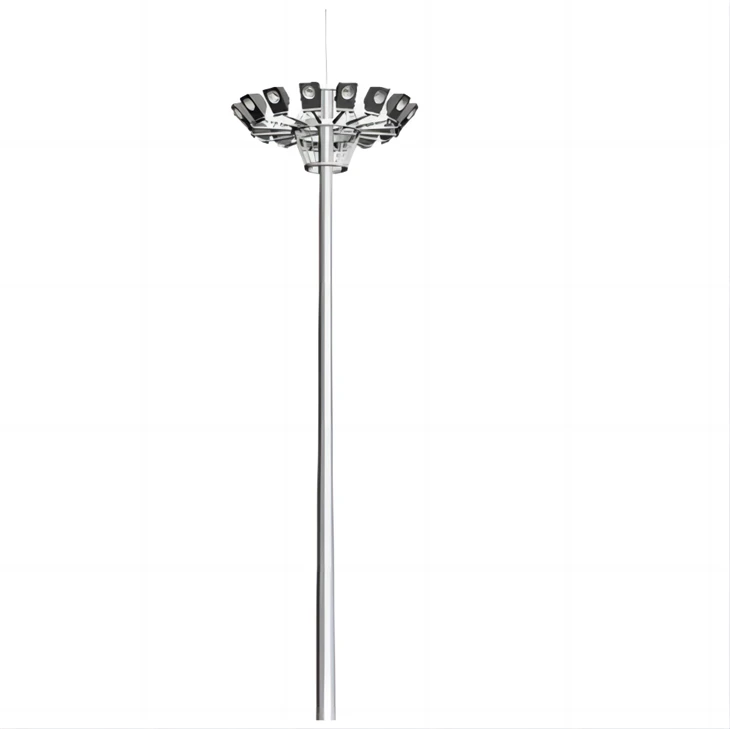

For example, in areas with soft soil, a deeper and wider foundation may be required to provide sufficient support. Once the hole is dug, steel reinforcement bars are placed inside. These bars add strength to the foundation and help it withstand the forces acting on the pole.
After that, concrete is poured into the hole. The concrete needs to be of high quality and properly mixed to ensure a strong and durable foundation. The pole is then inserted into the wet concrete and secured in place. As the concrete cures, it forms a solid bond with the pole, providing a stable base. You can check out our Outdoor Mast Light for more information on how these poles are used in outdoor settings.
2. Ground Screw Anchoring
Ground screw anchoring is a relatively new and innovative method. It involves screwing large helical screws into the ground. These screws act as anchors for the solar high mast pole. One of the main advantages of ground screw anchoring is its speed of installation. Unlike foundation anchoring, which can take several days for the concrete to cure, ground screw anchors can be installed in a matter of hours.
This method is also less invasive to the environment. It doesn't require large - scale excavation, which means less disruption to the surrounding area. However, ground screw anchoring may not be suitable for all soil types. In very hard or rocky soil, it can be difficult to screw the anchors into the ground. Our High Mast Pole with Led Flood Lighting System can be paired with ground screw - anchored poles in the right conditions.
3. Deadman Anchoring
Deadman anchoring is another option. A deadman is a heavy object, usually made of concrete or steel, that is buried in the ground. The pole is then connected to the deadman using cables or rods. This method is often used in areas where the soil is too soft for other anchoring methods or where the pole needs to be easily removable.
The deadman needs to be large and heavy enough to counteract the forces acting on the pole. The cables or rods connecting the pole to the deadman must be strong and properly tensioned. Deadman anchoring provides a flexible solution, but it does require regular maintenance to ensure that the connections remain secure.
Factors Affecting Anchoring Method Selection
1. Soil Conditions
As mentioned earlier, soil conditions play a major role in determining the appropriate anchoring method. In sandy or loose soil, foundation anchoring or ground screw anchoring may be more suitable. In clayey soil, which can expand and contract with changes in moisture, a well - designed foundation with proper reinforcement is often necessary.
In rocky soil, ground screw anchoring may be difficult, and foundation anchoring or deadman anchoring could be better options. It's important to conduct a soil test before installing a solar high mast pole to understand the soil characteristics and choose the right anchoring method accordingly.
2. Pole Height and Weight
Taller and heavier poles require more robust anchoring. A 25 - meter high mast pole, for example, will need a stronger foundation or more secure anchoring than a shorter pole. Our 25m High Mast Lighting is a great example of a tall pole that needs careful consideration in terms of anchoring.
The weight of the solar panels and lighting fixtures also adds to the overall load on the pole. If the pole has a large number of high - powered solar panels and bright floodlights, the anchoring system must be able to support the additional weight.
3. Environmental Conditions
Areas prone to high winds, hurricanes, or earthquakes require more reliable anchoring. In windy regions, the pole may experience strong lateral forces, and the anchoring system must be designed to resist these forces. Earthquake - prone areas need anchoring that can withstand ground movement without causing the pole to collapse.
Installation and Maintenance
Once the appropriate anchoring method is selected, proper installation is crucial. The installation process should follow the manufacturer's guidelines and local building codes. This ensures that the pole is installed safely and correctly.
Regular maintenance is also important. For foundation - anchored poles, check for any signs of cracking or settling in the concrete. For ground screw anchors, make sure the screws are still tightly screwed into the ground. For deadman anchoring, inspect the cables or rods for any signs of wear or damage.
Conclusion
In conclusion, the anchoring method of a solar high mast pole is a critical factor in its performance and safety. There are several anchoring methods available, each with its own advantages and limitations. The selection of the anchoring method depends on soil conditions, pole height and weight, and environmental conditions.
If you're in the market for a solar high mast pole and need more information on anchoring or other aspects, don't hesitate to reach out. We're here to help you make the right choice for your project. Whether you need a simple outdoor mast light or a complex high - mast pole with a led flood lighting system, we've got you covered. Let's start a conversation about your requirements and find the best solution together!
References
- "Structural Design of High Mast Lighting Poles" - A technical guide on high mast pole design and anchoring.
- "Soil Mechanics for Civil Engineers" - A comprehensive resource on soil properties and their impact on foundation design.


