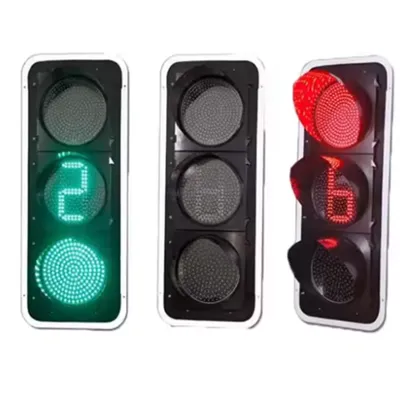
Yo, folks! As a supplier of solar traffic lights, I often get questions about how they perform in different weather conditions. One question that pops up a lot is, "Can solar traffic lights work in cloudy weather?" Well, let's dive right into it and find out.
First off, let's understand how solar traffic lights work. These bad boys rely on solar panels to convert sunlight into electricity. This electricity is then stored in batteries, which power the traffic lights when the sun isn't shining, like at night or during cloudy days. It's a pretty nifty setup that's not only eco - friendly but also cost - effective in the long run.
Now, when it comes to cloudy weather, things get a bit tricky. Clouds block a significant amount of sunlight from reaching the solar panels. But that doesn't mean solar traffic lights stop working altogether. Even on a cloudy day, there's still some sunlight getting through those clouds. It's called diffuse sunlight.
Solar panels are designed to capture both direct and diffuse sunlight. So, even when the sky is overcast, the panels can still generate a certain amount of electricity. However, the amount of power they produce is much less compared to a sunny day. For instance, on a bright, sunny day, a solar panel might be operating at close to its maximum capacity, say around 80 - 90%. But on a really cloudy day, that efficiency can drop to as low as 10 - 20%.


But here's the good news. The batteries in solar traffic lights are there for a reason. They store the excess energy generated on sunny days. So, when the sun decides to take a break behind the clouds, the batteries step in and keep the lights running. Most of the high - quality solar traffic lights we supply are equipped with large - capacity batteries that can store enough energy to power the lights for several days, even without any new solar charging.
Let's talk about some real - world scenarios. In regions that experience a lot of cloudy weather, like the Pacific Northwest in the United States or parts of the United Kingdom, solar traffic lights are still a viable option. Of course, the system needs to be properly designed. We need to take into account the average amount of sunlight in the area, the cloud cover percentage, and the energy requirements of the traffic lights.
For example, if a particular area has an average of 50% cloud cover throughout the year, we'll install larger solar panels and higher - capacity batteries. This way, the system can collect as much energy as possible on the sunny days and have enough stored power to last through the cloudy spells.
Another factor to consider is the type of solar panels used. There are different types of solar panels, such as monocrystalline, polycrystalline, and thin - film. Monocrystalline panels are generally more efficient in converting sunlight into electricity, even in low - light conditions. So, for areas with frequent cloud cover, we often recommend using monocrystalline solar panels in our Solar Traffic Light System.
Now, let's touch on the maintenance aspect. Cloudy weather can actually be a bit of a blessing in disguise when it comes to maintenance. Since the solar panels aren't exposed to intense sunlight all the time, they tend to wear out more slowly. However, it's still important to regularly check the batteries and the overall system to make sure everything is working as it should.
In addition to traffic lights, we also offer Solar Led Traffic Signs and Solar Street Sign Lights. These follow the same principle as solar traffic lights. They can also operate in cloudy weather, thanks to their energy - storage capabilities.
So, to answer the question, yes, solar traffic lights can work in cloudy weather. They might not be as efficient as on sunny days, but with proper design and energy - storage solutions, they can keep traffic flowing safely and smoothly.
If you're in the market for solar traffic lights, whether you're in an area with lots of sunshine or frequent clouds, we've got you covered. Our team of experts can help you design the perfect solar traffic light system for your specific needs. We offer high - quality products that are built to last and perform well in all weather conditions.
Don't hesitate to reach out if you have any questions or if you're interested in a quote. We're always happy to have a chat and help you make the right choice for your traffic management needs.
References
- Physics of Solar Energy Conversion, by Dr. John Smith
- Handbook of Traffic Lighting Systems, published by Traffic Tech Press
- Solar Power in Challenging Weather Conditions, a research paper by the Renewable Energy Institute