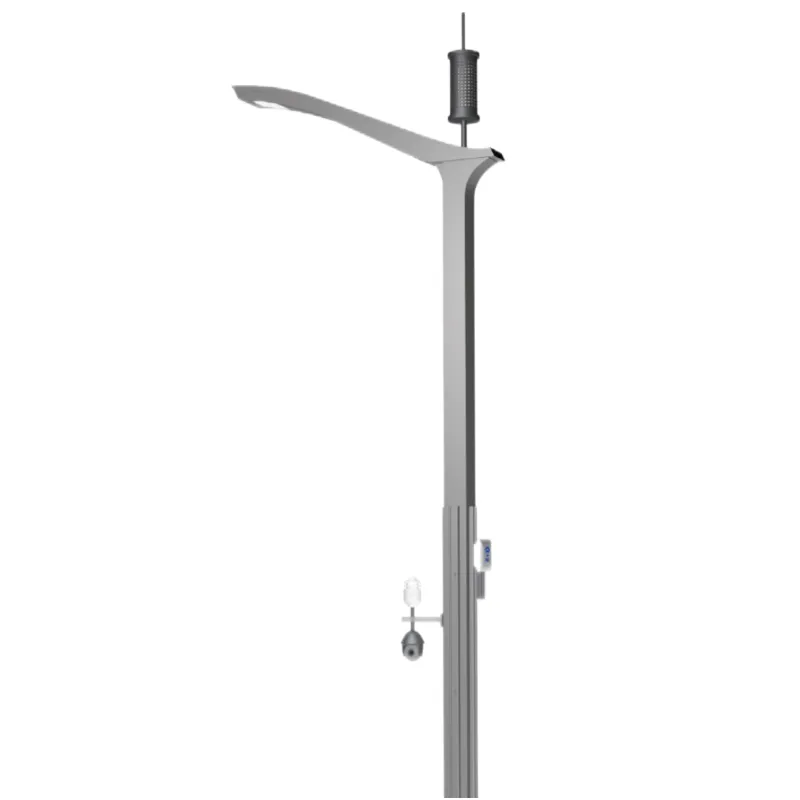
When it comes to illuminating our roads, LED road lamps have become the go - to choice for many municipalities, businesses, and contractors. As a LED road lamp supplier, I've seen firsthand how the demand for these lights has grown over the years. One of the key aspects that customers often ask about is the light quality of LED road lamps and how they stack up against other lighting options. So, let's dive in and take a close look at how LED road lamps compare in terms of light quality.
Color Rendering Index (CRI)
The Color Rendering Index, or CRI, is a measure of how accurately a light source can reproduce the colors of objects as compared to natural sunlight. A CRI of 100 means that the light source can perfectly render all colors. Traditional high - pressure sodium (HPS) lamps, which were once the standard for road lighting, typically have a CRI of around 20 - 25. This means that they make everything look yellowish and can't accurately show the true colors of objects.
On the other hand, LED road lamps can have a much higher CRI. Many of our Solar Led Street Light 30w models have a CRI of 70 or higher. This higher CRI is a game - changer for road lighting. It allows drivers to see the colors of traffic signs, the clothing of pedestrians, and the details of vehicles more accurately. For example, a red stop sign will look truly red under LED lighting, making it easier for drivers to recognize and react to it.
Color Temperature
Color temperature is another important factor in light quality, measured in Kelvins (K). Lower color temperatures (around 2700K - 3000K) produce a warm, yellowish light, similar to the light of an old - fashioned incandescent bulb. Higher color temperatures (5000K - 6500K) result in a cool, bluish - white light, which is closer to natural daylight.
For road lighting, a color temperature in the range of 4000K - 5000K is often considered ideal. Lights in this range provide good visibility without causing discomfort or glare. Our 300 Watt Street Light comes in a variety of color temperatures, and we recommend the 4500K option for most road applications. This color temperature helps drivers maintain their visual acuity and reduces eye strain during long drives.
Uniformity of Light
Uniformity of light distribution is crucial for road safety. Uneven lighting can create dark spots and bright areas, which can be confusing for drivers and increase the risk of accidents. LED road lamps have a significant advantage here. Unlike traditional lamps that may have a focused beam of light, LED technology allows for more precise control of light distribution.
We use advanced optical design in our 120 Watt Street Light to ensure that the light is spread evenly across the road surface. This means that there are no sudden changes in brightness, and the entire roadway is well - lit. Pedestrians and cyclists also benefit from this uniform lighting, as it allows them to see clearly and be seen by motorists.
Glare Control
Glare can be a major problem with road lighting. It can blind drivers temporarily, making it difficult for them to see the road ahead. LED road lamps can be designed to minimize glare. By using special lenses and reflectors, we can direct the light where it's needed and reduce the amount of light that shines directly into drivers' eyes.
Our 100w Solar Led Street Light is equipped with anti - glare features. These features ensure that the light is focused on the ground and the road, rather than being scattered into the sky or reflected into the eyes of oncoming traffic. This not only improves safety but also reduces light pollution, which is an important consideration for many communities.
Lumen Output
The lumen output of a light source indicates how much light it produces. When it comes to road lighting, having an appropriate lumen output is essential. Too little light, and the road may not be visible; too much light, and it can cause glare and waste energy.
Our 5000 Lumen Solar Street Light is designed to provide the right amount of light for different road conditions. For residential roads, a lower lumen output may be sufficient, while major highways and busy intersections require higher lumen output to ensure maximum visibility. LED technology allows us to adjust the lumen output easily to meet the specific needs of each project.
Long - term Light Quality
One of the great things about LED road lamps is their long - term light quality. Traditional lamps tend to degrade over time, losing their brightness and color accuracy. LED lamps, however, have a much longer lifespan and better long - term performance.
The solid - state design of LED lights means that they are more resistant to shock, vibration, and temperature changes. This results in a more stable light output over the life of the lamp. Our LED road lamps are designed to maintain a high level of light quality for many years, reducing the need for frequent replacements and maintenance.


In conclusion, when it comes to light quality, LED road lamps are far superior to traditional lighting options. They offer better color rendering, more appropriate color temperatures, uniform light distribution, less glare, and stable long - term performance.
If you're in the market for high - quality LED road lamps, I encourage you to get in touch with me. Whether you need lamps for a small residential street or a large urban highway, we have the right solution for you. We can work with you to understand your specific requirements and provide the best - fitting LED road lamps for your project. Don't hesitate to start the conversation about your next lighting project.
References
- Rea, M. S. (Ed.). (2000). The IESNA lighting handbook. Illuminating Engineering Society of North America.
- Schreuder, D. A. (1998). Traffic and highway lighting. Taylor & Francis.