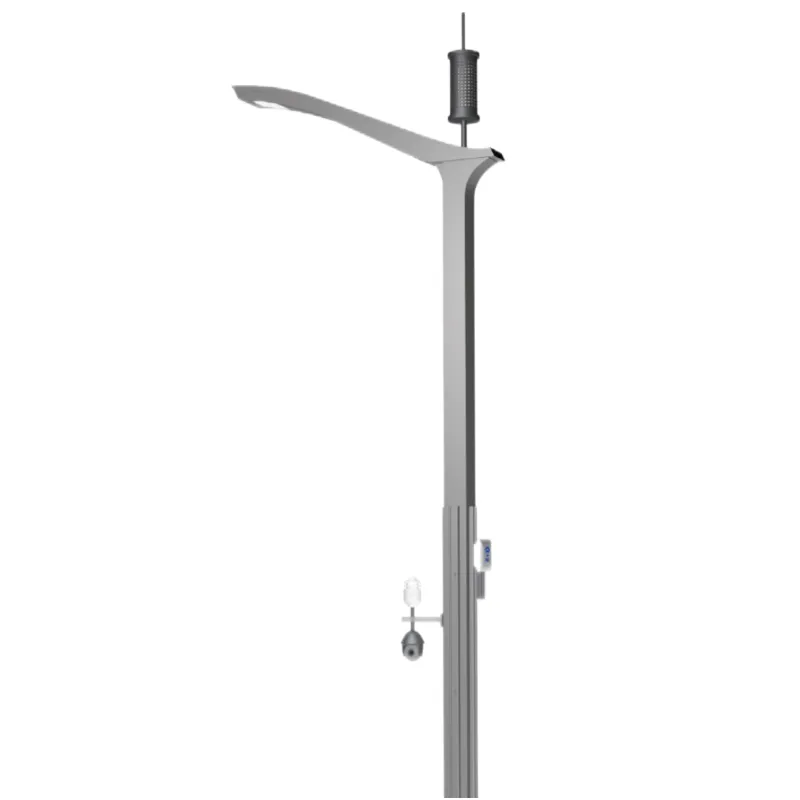
In the modern urban landscape, the issue of noise pollution has become a significant concern. As a supplier of smart street lights, I've witnessed firsthand how these innovative technologies can play a crucial role in reducing noise pollution. In this blog post, I'll delve into the various ways smart street lights contribute to creating a quieter and more peaceful urban environment.
1. Energy - Efficient Design Reduces Machinery Noise
One of the primary ways smart street lights help in reducing noise pollution is through their energy - efficient design. Traditional street lights often rely on outdated technologies such as high - pressure sodium lamps. These lamps require large - scale transformers and ballasts, which can generate a significant amount of humming noise.
In contrast, smart street lights, especially those based on LED technology, have a much more streamlined and energy - efficient design. LEDs consume less power and do not need bulky transformers and ballasts. As a result, the mechanical components that could potentially produce noise are minimized. This reduction in noisy machinery means that the background hum associated with traditional lighting systems is eliminated, leading to a quieter street environment.
For instance, in many cities that have made the switch from traditional to smart street lights, residents have reported a noticeable decrease in the constant buzzing sound that used to be present in the evenings. Our Automatic Smart Street Light is a prime example of this energy - efficient design. It not only provides high - quality illumination but also operates silently, contributing to a noise - free streetscape.
2. Intelligent Lighting Control Reduces Unnecessary Noise
Smart street lights are equipped with an Intelligent Street Light Control System that allows for precise management of lighting levels. This system can adjust the brightness of the lights based on various factors such as time of day, traffic volume, and ambient light conditions.
During low - traffic hours, the lights can be dimmed automatically. This not only saves energy but also reduces the need for vehicles to use their high - beam lights. High - beam lights can sometimes cause drivers to be more aggressive, leading to increased honking and revving of engines. By providing just the right amount of light, smart street lights help to keep traffic flowing smoothly and reduce the noise generated by impatient drivers.
In addition, the intelligent control system can also detect when there is no activity in an area. For example, in a park or a residential alleyway, if no movement is detected for a certain period, the lights can be turned off or dimmed to a minimum level. This reduces the overall energy consumption and also eliminates any potential noise from the lighting system itself, such as the clicking sounds that can occur when traditional lights are turned on and off manually.
3. Smart Lighting and Traffic Management
Smart street lights can be integrated with traffic management systems to further reduce noise pollution. By using sensors and data analytics, these lights can communicate with traffic signals and other infrastructure elements.
For example, smart street lights can detect the flow of traffic and adjust the timing of traffic signals accordingly. This helps to reduce congestion, as vehicles can move through intersections more smoothly. Congestion is a major source of noise pollution, as cars are often idling, accelerating, and braking frequently. By optimizing traffic flow, smart street lights can significantly reduce the noise generated by traffic.
Moreover, some smart street lights are equipped with sensors that can detect emergency vehicles. When an ambulance or a fire truck is approaching, the lights can change their color or flash to alert drivers. This allows drivers to quickly clear the way, reducing the need for emergency vehicles to use their sirens for an extended period. As a result, the overall noise level in the area is reduced. Our Smart Urban Lighting solutions are designed to be easily integrated with traffic management systems, providing a comprehensive approach to noise reduction.


4. Noise - Absorbing Materials in Smart Street Lights
Another innovative aspect of smart street lights is the use of noise - absorbing materials in their construction. Some of our smart street light models are designed with special enclosures and fixtures that are made from materials that can absorb and dampen sound waves.
These materials are carefully selected to not only reduce the noise generated by the lighting system itself but also to help in reducing external noise. For example, in areas near busy roads or industrial zones, the noise - absorbing properties of the smart street lights can act as a buffer, reducing the amount of noise that reaches nearby residential areas.
The use of these materials also helps in improving the overall acoustic environment of the city. By reducing the reflection and transmission of sound waves, smart street lights contribute to a more pleasant and peaceful living and working environment.
5. Community Engagement and Awareness
As a smart street light supplier, we also play a role in community engagement and awareness. We work closely with local governments, urban planners, and residents to educate them about the benefits of smart street lights in reducing noise pollution.
By organizing workshops and information sessions, we can raise awareness about how these lights work and how they can contribute to a quieter city. This can lead to more widespread adoption of smart street lights, as communities become more interested in improving their quality of life.
In addition, we encourage feedback from the community. By listening to the concerns and suggestions of residents, we can continuously improve our products and services. This collaborative approach helps to ensure that the smart street lights we provide are tailored to the specific needs of each community, further enhancing their effectiveness in reducing noise pollution.
Conclusion
In conclusion, smart street lights offer a multifaceted solution to the problem of noise pollution in urban areas. Through their energy - efficient design, intelligent control systems, integration with traffic management, use of noise - absorbing materials, and community engagement efforts, these lights can significantly reduce the amount of noise generated by both lighting systems and traffic.
If you're interested in learning more about how our smart street lights can contribute to reducing noise pollution in your area, or if you're considering a procurement of smart street lighting solutions, we'd be more than happy to discuss your needs. Contact us to start a conversation about how we can work together to create a quieter, more sustainable urban environment.
References
- "Noise Pollution in Urban Areas: Causes and Solutions" - Journal of Urban Planning
- "The Impact of Smart Lighting on Traffic and Noise Reduction" - Transportation Research Board
- "Innovative Materials for Noise Absorption in Urban Infrastructure" - Materials Science Journal