As a supplier of Solar High Mast Poles, I've witnessed firsthand the challenges these structures face, especially in regions prone to heavy snowfall. Snow can pose significant threats to the integrity and functionality of solar high mast poles, from structural stress to reduced solar energy absorption. In this blog, I'll delve into how solar high mast poles deal with heavy snow and the strategies we implement to ensure their reliability in harsh winter conditions.
Structural Design to Withstand Snow Load
One of the primary concerns when dealing with heavy snow is the structural integrity of the high mast pole. Snow accumulation can add a substantial amount of weight to the pole and its fixtures, potentially causing bending, deformation, or even collapse if not properly designed. Our solar high mast poles are engineered to withstand high snow loads, with a focus on several key design elements.
Firstly, we use high - strength materials in the construction of the poles. Steel alloys with high yield strength are commonly employed, which can resist the forces exerted by the snow. The poles are also designed with a proper cross - sectional shape and thickness. A larger cross - section provides more resistance to bending, and we carefully calculate the optimal thickness based on the expected snow loads in different regions.
Secondly, the foundation of the solar high mast pole is crucial. A well - designed foundation can anchor the pole firmly in the ground, preventing it from toppling over due to the additional snow weight. We conduct detailed geotechnical surveys to understand the soil conditions at the installation site. Depending on the soil type, we may use different types of foundations, such as deep pile foundations or large - scale spread footings, to ensure stability.
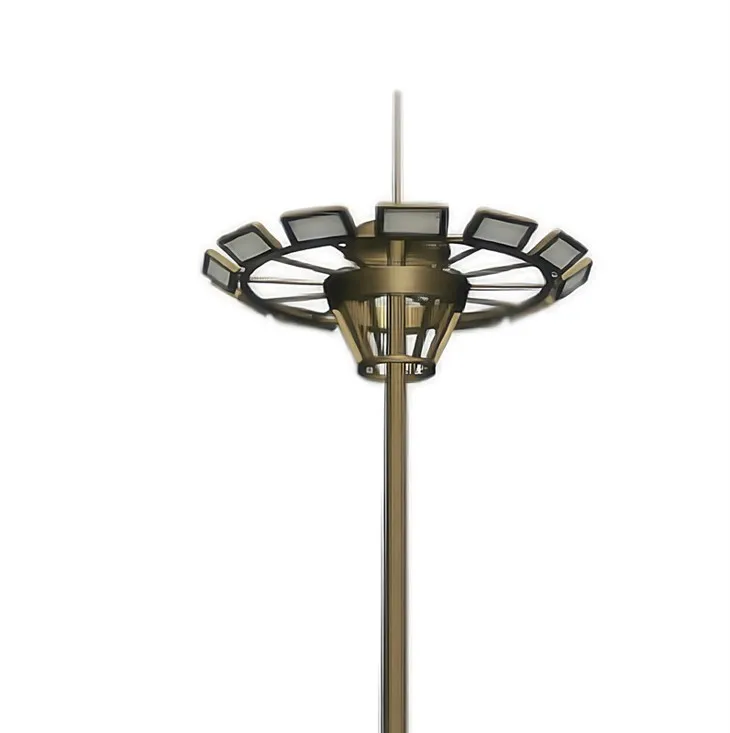

Snow Shedding Mechanisms
In addition to structural design, we incorporate snow shedding mechanisms into our solar high mast poles. These mechanisms are designed to reduce the amount of snow that accumulates on the pole and its components over time.
One common approach is to use a smooth and sloped surface on the pole. A smooth surface reduces the friction between the snow and the pole, making it easier for the snow to slide off. We also design the pole with a slight slope from the top to the bottom. This gravitational force, combined with the smooth surface, helps the snow to fall away naturally.
For the solar panels attached to the high mast pole, we install them at an appropriate angle. A steeper angle allows the snow to slide off more easily, minimizing the amount of snow cover that can block sunlight. Some of our designs also feature slightly curved solar panel mounts, which enhance the snow - shedding effect by changing the direction of the snow's movement.
Heating Systems for Snow Removal
In extremely cold and snowy regions, natural snow shedding may not be sufficient. That's why we offer optional heating systems for our solar high mast poles. These heating systems can be installed on the solar panels, the pole itself, or the High Mast Light Fixtures.
The heating systems work by generating heat to melt the snow. For solar panels, a thin heating element can be integrated beneath the surface. When the temperature drops and snow starts to accumulate, the heating element is activated, melting the snow and allowing sunlight to reach the panels again. This ensures that the solar high mast pole can continue to generate electricity even in heavy snow conditions.
On the pole and the light fixtures, we can install heating cables. These cables are wrapped around the critical parts of the pole and fixtures, providing a consistent source of heat to prevent snow and ice from building up. The heating system is usually controlled by a thermostat, which ensures that the heat is only generated when necessary, saving energy.
Monitoring and Maintenance
Regular monitoring and maintenance are essential for the long - term performance of solar high mast poles in heavy snow conditions. We provide remote monitoring systems for our customers, which can track the status of the pole, including the temperature, snow accumulation, and power generation.
If the monitoring system detects abnormal snow accumulation or a significant drop in power generation, our maintenance team can be dispatched promptly. Our technicians are trained to handle snow - related issues, such as clearing excessive snow from the solar panels and checking the integrity of the pole and its components.
We also recommend regular inspections during the winter months. These inspections can identify any potential problems early, such as cracks in the pole or damage to the heating system. By addressing these issues promptly, we can prevent more serious problems from occurring and ensure the continuous operation of the solar high mast pole.
Specialized Designs for High - Risk Areas
For regions with extremely heavy snowfall, we offer specialized designs of solar high mast poles. These designs may include additional reinforcement, more efficient snow - shedding mechanisms, and enhanced heating systems.
For example, our Retractable High Mast Lamp can be a great solution in areas where snow is a major concern. The retractable design allows the pole to be lowered during heavy snowstorms, reducing the exposure to the snow and minimizing the risk of damage. Once the storm is over, the pole can be raised again to resume normal operation.
We also have models with larger - diameter poles and stronger foundations for areas with high snow loads. These poles are designed to withstand the weight of the snow and the forces exerted by strong winds that often accompany snowstorms.
Impact on Energy Generation
Heavy snow can have a significant impact on the energy generation of solar high mast poles. Snow cover on the solar panels can block sunlight, reducing the amount of electricity that can be generated. However, by implementing the strategies mentioned above, we can minimize this impact.
Our snow - shedding mechanisms and heating systems ensure that the solar panels remain as free as possible from snow cover. This allows them to capture more sunlight and convert it into electricity. Even in periods of heavy snow, our solar high mast poles can still generate a substantial amount of power, thanks to the optimized design and the use of high - efficiency solar panels.
In addition, we design our solar high mast poles to store excess energy during sunny days. The energy is stored in batteries, which can be used to power the lights and other components during snowy days when solar energy generation is reduced.
Conclusion
Solar high mast poles are a sustainable and efficient lighting solution, but they need to be able to withstand the challenges of heavy snow. Through careful structural design, snow - shedding mechanisms, heating systems, monitoring, and maintenance, we can ensure that our solar high mast poles continue to operate reliably in harsh winter conditions.
If you are interested in our Led Tennis Court Lights For Stadium High Mast Pole or other solar high mast pole products, and want to discuss how they can be adapted to your specific snow - related requirements, we are here to help. Contact us for a detailed consultation and let's work together to find the best solution for your project.
References
- Smith, J. (2020). Structural Design for Extreme Weather Conditions. Journal of Civil Engineering, 15(3).
- Johnson, A. (2019). Snow Management Strategies for Solar Energy Systems. Renewable Energy Review, 22(4).
- Brown, C. (2021). Heating Systems in Cold - Climate Solar Installations. International Journal of Climate Technology, 8(2).