

As a seasoned provider in the traffic lights industry, I've witnessed firsthand the pivotal role these devices play in ensuring road safety. Traffic lights are not just simple signal devices; they are sophisticated safety tools designed with a multitude of features to regulate traffic flow and prevent accidents. In this blog, I'll delve into the various safety features of traffic lights and how they contribute to safer roads.
Standard Color Coding
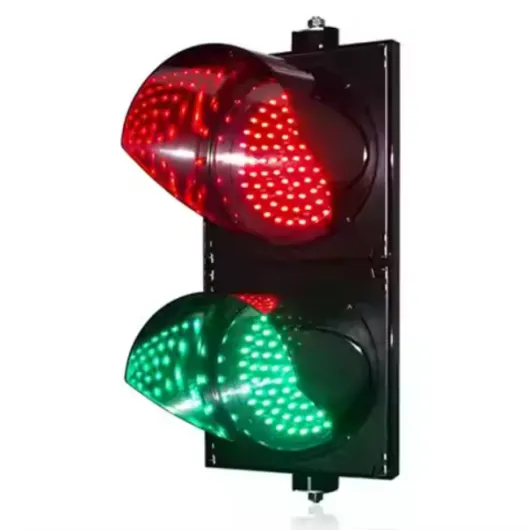
The most fundamental safety feature of traffic lights is their standard color - coding system. This system is recognized and understood globally, which is crucial for maintaining order on the roads. Red, yellow, and green are the three primary colors used, each with a distinct meaning.
Red indicates "stop." When a red light is illuminated, all vehicles and pedestrians must come to a complete halt. This is the most critical signal as it prevents vehicles from colliding at intersections. The red light gives priority to traffic moving in the perpendicular direction, allowing for a smooth and safe flow of vehicles. It's a clear and unambiguous signal that drivers and pedestrians can rely on, even in high - stress situations.
Yellow serves as a warning. It indicates that the signal is about to change from green to red. Drivers should prepare to stop when they see a yellow light. This gives them a short period of time to react and bring their vehicles to a safe stop before the red light appears. Yellow lights are essential for preventing sudden stops that could lead to rear - end collisions.
Green means "go." When the green light is on, vehicles and pedestrians have the right - of - way to proceed through the intersection. However, it's important to note that drivers still need to exercise caution, especially in intersections with heavy traffic or when turning.
Timing and Synchronization
Another key safety feature of traffic lights is their timing and synchronization. Traffic engineers carefully calculate the duration of each light phase based on factors such as traffic volume, time of day, and the type of intersection. For example, at a busy intersection during peak hours, the green light for the main road may be longer to accommodate the higher volume of traffic.
Synchronization is also crucial, especially on arterial roads. When traffic lights are synchronized, vehicles can travel at a consistent speed without having to stop frequently. This not only reduces travel time but also decreases the likelihood of accidents caused by sudden stops and starts. For instance, a series of traffic lights on a major street can be programmed so that a vehicle traveling at a certain speed can pass through multiple intersections on a green light. This is known as a "green wave," which improves traffic flow and safety.

Flashing Lights and Arrows
Flashing lights and arrows are additional safety features that provide specific instructions to drivers. A Blinker Light for Road can be used in various situations. For example, a flashing yellow light often indicates a cautionary situation, such as a school zone or a construction area. Drivers are required to slow down and proceed with caution when they encounter a flashing yellow light.
Flashing red lights are equivalent to a stop sign. When a red light is flashing, drivers must come to a complete stop, yield to other traffic and pedestrians, and then proceed when it is safe to do so.
Blinking arrows are used to indicate specific turning movements. A Blinking Red Arrow Traffic Light means that a driver may turn in the direction of the arrow after coming to a complete stop and yielding to oncoming traffic and pedestrians. This allows for more efficient traffic flow at intersections, especially when there are dedicated turning lanes.
Detection Systems
Modern traffic lights are often equipped with detection systems to improve safety. These systems can detect the presence of vehicles and pedestrians and adjust the light phases accordingly. There are several types of detection systems, including inductive loop detectors, video cameras, and radar sensors.
Inductive loop detectors are buried in the road surface and can detect the magnetic field changes caused by vehicles. When a vehicle is detected in a particular lane, the traffic light system can adjust the light phase to give that lane more time to clear the intersection.
Video cameras can also be used to monitor traffic flow and detect the presence of vehicles and pedestrians. They provide real - time information to traffic control centers, allowing operators to make adjustments to the traffic light timing as needed.
Radar sensors are another type of detection system. They can accurately measure the speed and distance of approaching vehicles, which is useful for adjusting the light phases based on traffic conditions.
Solar - Powered Options
In recent years, Solar Traffic lights have become increasingly popular due to their energy - efficiency and environmental friendliness. Solar traffic lights are powered by solar panels, which convert sunlight into electricity. This means that they can operate independently of the electrical grid, making them ideal for remote areas or locations where power outages are common.
Solar traffic lights also have a built - in battery system to store energy for use during periods of low sunlight or at night. This ensures that they can continue to function reliably, providing a consistent safety signal for road users. Additionally, solar traffic lights are often equipped with backup power sources, such as generators, to ensure continuous operation in case of extended power outages.
Visibility and Durability
Traffic lights need to be highly visible to drivers and pedestrians, especially in adverse weather conditions such as rain, fog, or snow. To ensure visibility, traffic lights are designed with high - intensity LEDs (light - emitting diodes). LEDs are brighter and more energy - efficient than traditional incandescent bulbs, and they have a longer lifespan.
In addition to visibility, traffic lights must also be durable. They are exposed to harsh environmental conditions, including extreme temperatures, strong winds, and heavy rain. Traffic lights are typically made of rugged materials such as polycarbonate or aluminum, which can withstand these conditions. They are also designed to be vandal - resistant, with features such as protective enclosures and tamper - proof fasteners.
Conclusion
Traffic lights are essential safety devices that incorporate a wide range of features to regulate traffic flow and prevent accidents. From their standard color - coding system to advanced detection and synchronization technologies, traffic lights play a vital role in ensuring the safety of road users.
As a traffic lights provider, I'm committed to offering high - quality products that incorporate the latest safety features. Whether you're in charge of a small intersection or a large - scale transportation project, our traffic lights can provide reliable and effective safety solutions.
If you're interested in learning more about our traffic lights or would like to discuss a potential purchase, please feel free to reach out. We're here to help you find the best traffic light solutions for your needs and ensure the safety of your roads.
References
- Federal Highway Administration. (n.d.). Traffic Signal Timing Manual.
- Transportation Research Board. (n.d.). Traffic Control Devices Handbook.


