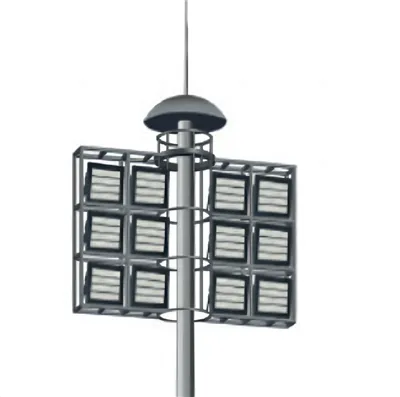
Hey there! As a supplier of small street lights, I often get asked about light intensity uniformity. It's a crucial factor when it comes to lighting up our streets, sidewalks, and public areas. So, let's dive into what light intensity uniformity is and why it matters for small street lights.
First off, what exactly is light intensity uniformity? Well, it's all about how evenly the light is distributed across a given area. When we talk about small street lights, we want to make sure that the light they emit doesn't create dark spots or overly bright areas. Instead, we aim for a consistent level of illumination that provides a safe and comfortable environment for pedestrians and drivers alike.


Imagine walking down a street at night. If the street lights have poor light intensity uniformity, you might find yourself constantly stepping in and out of shadows, which can be not only annoying but also dangerous. On the other hand, when the light is evenly distributed, you can see clearly where you're going, and there are no unexpected patches of darkness to trip over.
So, how do we achieve good light intensity uniformity in small street lights? There are a few key factors to consider.
1. Optics Design
The optics of a street light play a huge role in determining its light distribution. High - quality small street lights are designed with advanced optics that can direct the light where it's needed most. For example, some lights use reflectors and lenses to spread the light evenly over a specific area. This helps to minimize hotspots (areas of excessive brightness) and dark areas.
Our Led Lamp Street Light is a great example of a product with excellent optics. It's engineered to provide a wide and uniform beam of light, ensuring that the street is well - lit from curb to curb.
2. Placement and Spacing
Where you place the small street lights and how far apart they are also impact light intensity uniformity. If the lights are too close together, you might end up with areas that are overly bright, while if they're too far apart, there will be dark spots in between.
We recommend following industry standards when it comes to placement and spacing. For small street lights, a spacing of around 15 - 20 meters is often ideal, depending on the height of the light poles and the type of area being lit. This allows for a smooth transition of light between each fixture, creating a more uniform illumination.
3. Light Source Quality
The quality of the light source itself is another important factor. LED lights are a popular choice for small street lights these days because they offer several advantages. They are energy - efficient, have a long lifespan, and can provide a high - quality light output.
Our Led Street Flood Light uses state - of - the - art LED technology. These LEDs are carefully selected to ensure consistent light output and color temperature, which contributes to better light intensity uniformity.
4. Maintenance
Regular maintenance is essential to keep the light intensity uniformity in check. Over time, dirt, dust, and debris can accumulate on the light fixtures, which can block the light and cause uneven illumination. By cleaning the fixtures regularly and replacing any faulty bulbs or components, you can ensure that the lights continue to provide a uniform light distribution.
Why Light Intensity Uniformity Matters
There are several reasons why light intensity uniformity is so important for small street lights.
Safety
As mentioned earlier, uniform lighting is crucial for safety. It helps pedestrians to see clearly where they're walking, reduces the risk of tripping and falling, and makes it easier for drivers to spot pedestrians and other obstacles on the road.
Aesthetics
Good light intensity uniformity also enhances the overall aesthetics of a street or public area. A well - lit street with evenly distributed light looks more inviting and pleasant, which can improve the quality of life for residents and visitors.
Energy Efficiency
When the light is evenly distributed, you can use fewer lights to achieve the same level of illumination. This means less energy consumption and lower electricity bills. For example, our 250 Watt Led Parking Lot Lights are designed to provide a high level of light intensity uniformity, allowing you to cover a large area with fewer fixtures.
Measuring Light Intensity Uniformity
There are a few ways to measure light intensity uniformity. One common method is to use a light meter to measure the illuminance at different points in the area being lit. The illuminance is then compared to determine the uniformity ratio. A higher uniformity ratio indicates better light intensity uniformity.
Another way is to use computer simulations. These simulations can model the light distribution of a street light system and predict how the light will be distributed across the area. This allows us to make adjustments to the design and placement of the lights before they are installed.
Conclusion
In conclusion, light intensity uniformity is a critical aspect of small street lights. It affects safety, aesthetics, and energy efficiency. By considering factors such as optics design, placement and spacing, light source quality, and maintenance, we can ensure that our small street lights provide a uniform and high - quality light output.
If you're in the market for small street lights and want to learn more about how we can help you achieve excellent light intensity uniformity, don't hesitate to reach out. We're here to answer your questions and provide you with the best lighting solutions for your needs.
References
- Lighting Handbook: Reference and Application Guide, Illuminating Engineering Society of North America
- LED Lighting Technology: Principles and Applications, John Wiley & Sons