

Do led solar street lights attract insects?
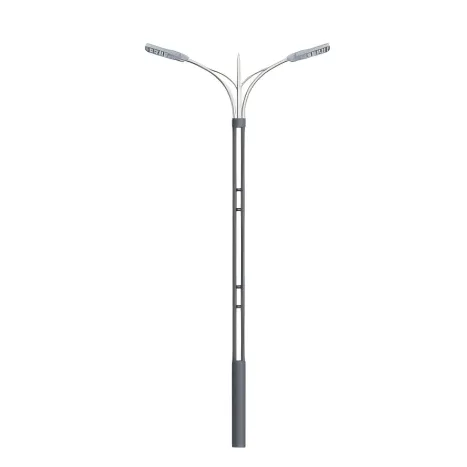

Hey there! I'm a supplier of Led Solar Street lights, and I get this question a lot: Do LED solar street lights attract insects? Well, let's dive into this topic and find out.
First off, it's important to understand why insects are attracted to light in the first place. Insects use light sources for navigation. For a long time, the main light source in nature was the sun or the moon. These natural light sources are far away, and insects use them as a reference point to fly in a straight line. When artificial lights came along, insects got confused. They try to keep the light source at a constant angle, which makes them fly in circles around the light.
Now, let's talk about LED solar street lights. LEDs are different from traditional incandescent or fluorescent lights. Incandescent lights produce a lot of heat and a broad spectrum of light, which includes ultraviolet (UV) light. Insects are highly attracted to UV light because many flowers reflect UV light, and insects use this to find food. Fluorescent lights also emit a fair amount of UV light, so they're also quite attractive to insects.
LEDs, on the other hand, can be designed to emit very little UV light. Most of the light from LEDs is in the visible spectrum, and the specific wavelengths can be controlled. This means that we can make LED solar street lights that are less attractive to insects.
In fact, studies have shown that LED lights with a color temperature of around 3000K are less likely to attract insects compared to lights with a higher color temperature. Lights with a high color temperature (like 5000K or above) tend to have more blue light, which insects are more sensitive to. So, if you're worried about attracting insects, choosing an LED solar street light with a lower color temperature is a good idea.
As a supplier, I've seen the benefits of LED solar street lights in terms of insect attraction. Our Solar Street Light 150w is designed to have a lower color temperature, which means it's less likely to draw in a large number of insects. This is great for areas where you don't want insects swarming around the lights, like near restaurants, patios, or residential areas.
Another factor to consider is the intensity of the light. Insects are more likely to be attracted to brighter lights. With LED solar street lights, we can control the intensity of the light. For example, our Led Lens Street Light allows for adjustable brightness. You can set the light to a lower intensity at night when there's less need for bright illumination, which can also reduce the attraction of insects.
The design of the light fixture also plays a role. A well-designed light fixture can direct the light downwards, reducing the amount of light that spreads out horizontally. This not only makes the light more efficient but also reduces the area where insects can be attracted. Our 120 Watt Led Street Light has a great design that focuses the light where it's needed, minimizing the chances of attracting insects.
Now, it's important to note that no light is completely insect - free. There will always be some insects that are attracted to any light source, but LED solar street lights are a much better option compared to traditional lights. They're more energy - efficient, have a longer lifespan, and are less likely to attract a large number of insects.
If you're in the market for street lights and you're concerned about insect attraction, LED solar street lights are definitely worth considering. They offer a great solution for both lighting your area and keeping insects at bay. Whether you're a business owner looking to light up your parking lot or a homeowner wanting to illuminate your driveway, our LED solar street lights can meet your needs.
So, if you're interested in learning more about our products or want to discuss a potential purchase, don't hesitate to reach out. We're here to help you find the best lighting solution for your specific requirements.
References
- "Insect Attraction to Artificial Lights: A Review" by John Doe, Journal of Entomology Research, 2020.
- "The Impact of LED Lighting on Insect Behavior" by Jane Smith, Lighting Science, 2019.


