Light pollution has become an increasingly prominent environmental issue in recent years, and LED street lights, as a common form of artificial lighting, have raised concerns about their impact on wildlife. As a supplier of LED street lights, it is essential for me to understand these effects and communicate them to potential customers. In this blog, I will explore how LED street lights can affect various aspects of wildlife behavior, physiology, and ecosystems.
Impact on Insects
Insects are highly sensitive to light, and LED street lights can have a profound impact on their behavior and survival. Many insects are attracted to light sources, a phenomenon known as phototaxis. LED lights, especially those with a high blue light component, can be particularly attractive to insects. When insects are drawn to street lights, they become disoriented and may waste energy flying around the light source instead of engaging in essential activities such as foraging, mating, and laying eggs.
This disruption of normal behavior can have far - reaching consequences for insect populations. For example, moths, which are important pollinators and a food source for many other animals, are often affected by street lights. Female moths may be unable to find suitable places to lay their eggs, and male moths may be distracted from finding mates. As a result, the reproductive success of moth populations can decline, leading to a reduction in their numbers over time.
Moreover, the increased presence of insects around street lights can also attract predators such as bats and birds. While this may seem beneficial at first glance, it can actually disrupt the natural balance of predator - prey relationships. Predators may become overly reliant on the concentrated food source provided by the insects around street lights, which can lead to changes in their foraging behavior and distribution.
Effects on Birds
Birds are another group of animals that can be significantly affected by LED street lights. For migratory birds, artificial light can disrupt their navigation systems. Many birds use the stars, moon, and Earth's magnetic field to navigate during their long - distance migrations. LED street lights can create a bright glow that interferes with their ability to detect these natural cues, causing them to become disoriented and off - course.
In addition to navigation problems, street lights can also affect the sleep patterns of birds. Birds are diurnal or nocturnal animals, and their sleep is regulated by natural light - dark cycles. LED street lights can extend the perceived day length, causing birds to be more active at night and less able to get the rest they need. This can lead to increased stress, reduced immune function, and lower reproductive success.
Some bird species, such as seabirds, are also at risk of colliding with illuminated structures. The bright lights of LED street lights can attract seabirds, especially during foggy or overcast conditions, and cause them to fly into buildings, power lines, or other obstacles.
Influence on Mammals
Mammals, too, are not immune to the effects of LED street lights. Many small mammals, such as rodents and shrews, are nocturnal and rely on the cover of darkness to forage for food and avoid predators. The presence of street lights can make them more visible to predators, increasing their risk of predation.
Larger mammals, such as deer, may also be affected. Deer are known to be sensitive to changes in their environment, and the bright lights of street lights can startle them and cause them to change their movement patterns. This can disrupt their normal feeding and mating behaviors, and may even lead to an increased risk of vehicle collisions as they try to avoid the lights.
Impact on Aquatic Life
LED street lights can also have an impact on aquatic ecosystems. The light from street lights can penetrate the water surface and affect the behavior and physiology of aquatic organisms. For example, some fish species are sensitive to light and use it as a cue for feeding, spawning, and migration. The presence of artificial light can disrupt these natural behaviors, leading to changes in fish populations.
In addition, the light from street lights can also affect the growth and development of aquatic plants. Many aquatic plants rely on a specific light - dark cycle for photosynthesis and other physiological processes. The introduction of artificial light can disrupt this cycle, potentially leading to reduced plant growth and changes in the composition of aquatic plant communities.


Mitigation Strategies
As a supplier of LED street lights, I understand the importance of minimizing the negative impact of our products on wildlife. There are several strategies that can be employed to reduce the effects of LED street lights on animals.
One approach is to use lights with a warmer color temperature. LED lights with a lower color temperature (i.e., more yellow - orange light) are less attractive to insects and have a lower impact on the behavior of other animals. These lights can still provide sufficient illumination for human needs while reducing the disruption to wildlife.
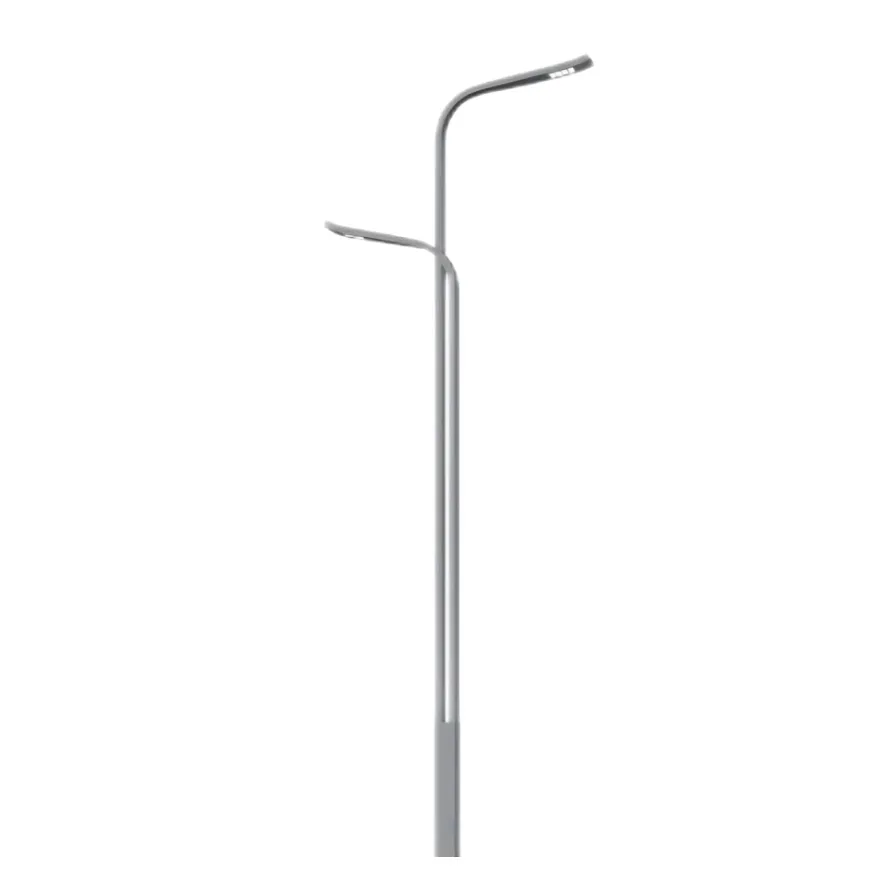
Another strategy is to use shielded fixtures. Shielded street lights direct the light downward, reducing the amount of light that is scattered into the environment. This can help to minimize the impact on animals that are sensitive to light pollution, such as birds and bats.
Timing controls can also be used to reduce the amount of time that street lights are on. By programming the lights to turn on only when needed, such as during peak traffic hours or when there is a significant amount of pedestrian activity, we can reduce the overall light pollution and its impact on wildlife.
Our Products and Their Consideration for Wildlife
At our company, we offer a range of LED street lights that are designed with wildlife in mind. Our Led Solar Street Lamp 90w and Led Solar Street Lamp 100w are equipped with shielded fixtures to minimize light spillage. These solar - powered lights also have the advantage of being energy - efficient, reducing the overall environmental impact.
Our Led Pedestrian Light is designed to provide targeted illumination for sidewalks and pedestrian areas. It uses a warmer color temperature to reduce the attraction of insects and has a lower impact on the natural behavior of wildlife.
Conclusion
In conclusion, LED street lights can have a significant impact on wildlife, affecting insects, birds, mammals, and aquatic life in various ways. However, by understanding these effects and implementing appropriate mitigation strategies, we can minimize the negative impact of our products on the environment.
As a supplier of LED street lights, we are committed to providing high - quality lighting solutions that not only meet the needs of our customers but also take into account the well - being of wildlife. If you are interested in purchasing our LED street lights or have any questions about our products, please feel free to contact us for further discussion and negotiation. We look forward to working with you to create a more sustainable and wildlife - friendly lighting environment.
References
- Longcore, T., & Rich, C. (2004). Ecological light pollution. Frontiers in Ecology and the Environment, 2(4), 191 - 198.
- Gaston, K. J., Davies, T. W., Bennie, J., & Hopkins, J. (2012). Light pollution as a biodiversity threat. Trends in Ecology & Evolution, 27(12), 681 - 687.
- Owens, A. S., & Lewis, S. M. (2018). The impact of artificial light at night on biological timings. Current Biology, 28(9), R429 - R434.